A specific temperament pattern: deeper processing of sensory and social input — named in research, and reflected in Way as Keen.
4 of 4 · Traits and temperament
Straight there
Our quick take · 17/25 · not psychological advice
- Quick insights
- Scientific validity
- Comprehensive
- Memorability
- Speed
About
High sensitivity (HSP) names a temperament pattern: some people process sensory and social information more deeply than others. Research often calls this sensory-processing sensitivity. Estimates commonly put a substantial minority of people in the higher band — often around one in five to one in three, depending on the study and cut-off.
It is not the same as introversion alone. Highly sensitive people can be more outgoing or more reserved; the common thread is depth of processing, not only where you get energy. It is also not only “high Neuroticism” on a Big Five profile, even though parts of the pattern can overlap with stress sensitivity and with Openness (for example noticing beauty and nuance).
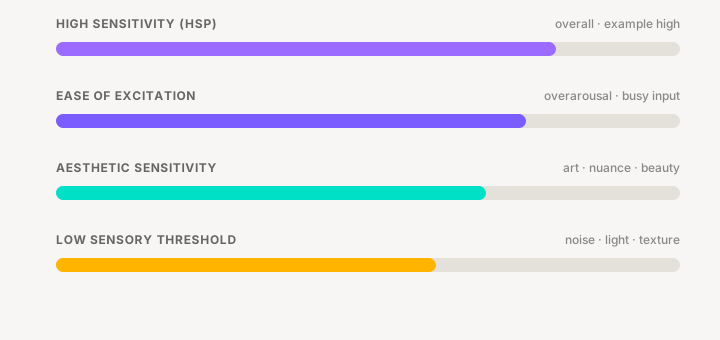
Our free Highly Sensitive Person test returns an overall sensitivity score and a plain band (for example highly sensitive, moderately sensitive, or lower sensitivity). Research writing also talks about facets under the same umbrella — ease of excitation, aesthetic sensitivity, and low sensory threshold. The diagram below is an example of a high overall score with those three facets also elevated, so you can see the fuller research picture.
People who recognise themselves in the label often find it a relief: a plain name for why bright rooms, open-plan noise, or emotional detail take more out of them — and why depth and care can be strengths when the setting fits.
Background
Elaine Aron and colleagues developed the modern popular and research language of the highly sensitive person in the 1990s, building questionnaires for sensory-processing sensitivity and a large self-help and practitioner literature around it. The Highly Sensitive Person Scale (Aron & Aron, 1997) is the classic research form many later tools follow.
The construct sits beside the Big Five rather than replacing it. Pure Big Five clustering does not always isolate the pattern on its own; labs still find value in measuring sensitivity directly. Twin and temperament work treat it as a stable individual difference with a biological flavour, while still leaving room for environment and learning.
Workplace and coaching uses vary in quality. The careful use is to name a real processing style and adjust load and recovery — not to turn “HSP” into a fixed excuse or a fashion label.
Strengths
It is specific. People who live with deep processing often feel seen for the first time when the pattern has a clear name.
It has a research base. Sensory-processing sensitivity is studied with questionnaires, behavioural work, and links to related temperament ideas — enough to take seriously as more than a buzzword.
It is practical. Knowing you run “hot” on sensory or social load helps with room design, meeting length, recovery, and choosing work that rewards care and detail.
The label is easy to remember and retell — stronger memorability than five continuous trait numbers for people who mainly needed this one insight.
Weaknesses
It is narrow on purpose. An HSP score is aimed at one temperament pattern, not a full map of personality traits, motives, or skills. That is a design choice, not a failed attempt to cover everything.
It does not use the full set of Big Five personality trait scales as its content. Research finds approximate overlap with parts of Openness and Neuroticism; Extraversion, Agreeableness, and Conscientiousness sit largely outside a plain HSP measure. A high-sensitivity score is not a substitute for five trait scores or an eight-way portrait.
Self-report still applies. Tiredness, a loud week, or a strong story about yourself can nudge answers. Treat the result as a useful sketch for conversation and experiment, not a final stamp.
Any popular label can be overused. The growth edge is pairing the name with agency — rest, boundaries, and fitting environments — rather than freezing identity around the word alone.
The www way
For a fuller trait read we use Way — eight ways of moving on Big Five ground, with high sensitivity kept in the picture. Keen is the way of moving that makes room for this temperament — part of how you move, not a separate clinical box. Way is free at every depth. Glimpse is short; Insight and Deeper use more questions on the same model and can include more sensitivity items where the product depth calls for them.
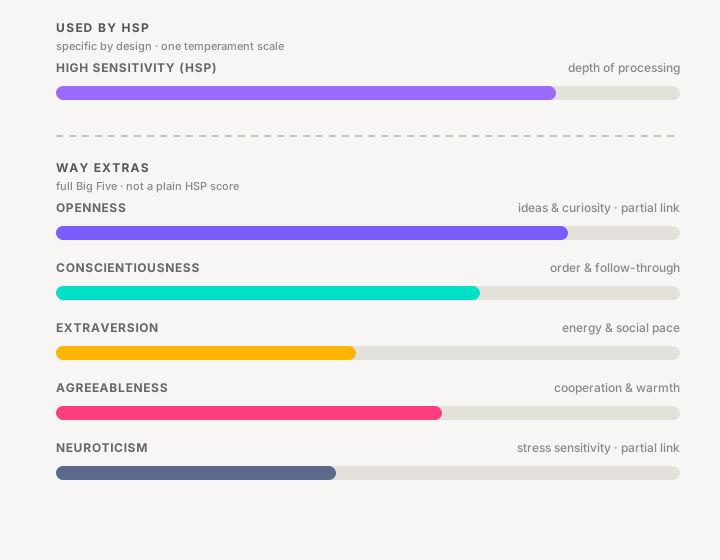
The chart below is an Insight-style sketch of coverage: HSP as the specialty scale above the line (specific by design), then the full five Big Five personality traits as Way extras below — because a full portrait needs more than sensitivity alone. Research links to Openness and Neuroticism are only approximate; Way still reports all five plus HSP. Raw sensory threshold and body detail also belong with Body and senses when those instruments are public.
The eight ways are on the Way page. The Way tests sit on Build your profile.
Want the original?
Our free Highly Sensitive Person test uses the Highly Sensitive Person Scale (Aron & Aron, 1997) from the Journal of Personality and Social Psychology, used under licence.
If you want the classic overall high-sensitivity score, use our free Highly Sensitive Person test. You get a sensitivity score (0–100%) and a plain band — highly sensitive, moderately sensitive, or lower sensitivity — not a full Big Five profile.